An audit is more than just analyzing problems—it’s a process that allows an organization to see itself from a new perspective and uncover where the real challenges lie. What matters most is building trust, both between teams and with the auditor. Through open collaboration and transparency, we can effectively fix business processes, point to new growth paths, and shape an organization ready for the challenges ahead.
IT Audit in practice: reducing risks and improving IT project management in healthcare
OUTCOMES
Results of partnership
Actionable
recommendations
The client received a report with a diagnosis of issues and corrective recommendations, including specific steps to improve both operational and technical processes.
Identified risks
The audit highlighted the most significant risks in architecture, infrastructure, and project management, giving the client stronger preparedness for potential challenges in the future.
Project management
improvements
The report analyzed the current project management approach and recommended actions to improve coordination, strengthen communication, and ensure consistent use of methodologies.
PROJECT
Genesis and business expectations
A pharmaceutical distribution company faced multiple challenges in delivering an IT systems transformation project under a third-party administrator (TPA) program aimed at optimizing operational processes and reducing costs.
The project encountered difficulties due to inconsistent processes and tools and methodologies that were poorly adapted to the organization’s specific needs. Organizational and technical issues surfaced in the form of extended timelines, repeated rollbacks to earlier project phases, and poorly defined business requirements.
From both the management and project teams’ perspective, it became critical to conduct a comprehensive review of processes and identify the areas with the greatest potential for improvement. The IT audit was expected to deliver a full diagnosis, enabling the organization to raise the quality and predictability of IT project execution.
PROJECT TIME
2 months
INDUSTRY
Healthcare
COUNTRY
Poland
SERVICES AND SOLUTIONS
The client
Who have we helped?
A leading pharmaceutical distributor in Poland, focused on supporting independent pharmacies by providing tools that strengthen their competitiveness and profitability.

REQUIREMENTS
Business challenges
- The need to migrate to a new system version based on a coherent plan and full alignment between documentation and implementation.
- The need to establish a unified methodology, a clear strategy, and effective coordination across projects.
- The requirement to precisely define business objectives and document processes in detail to avoid delays in analysis and solution implementation.
ACTIONS
Project execution process
Defining the scope, timeline, and objectives of the audit, followed by workshops to identify the main challenges.
SOLUTION
Scope and nature of the IT audit
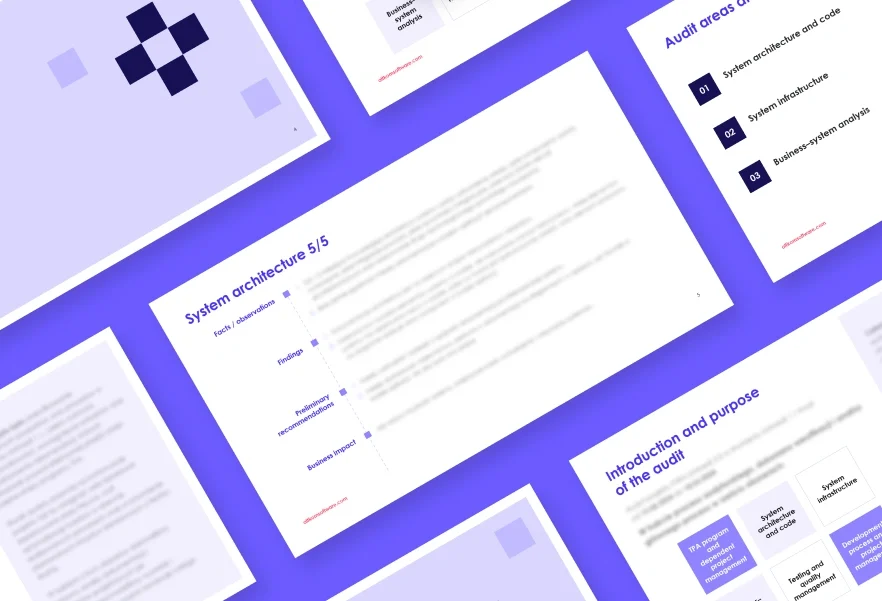
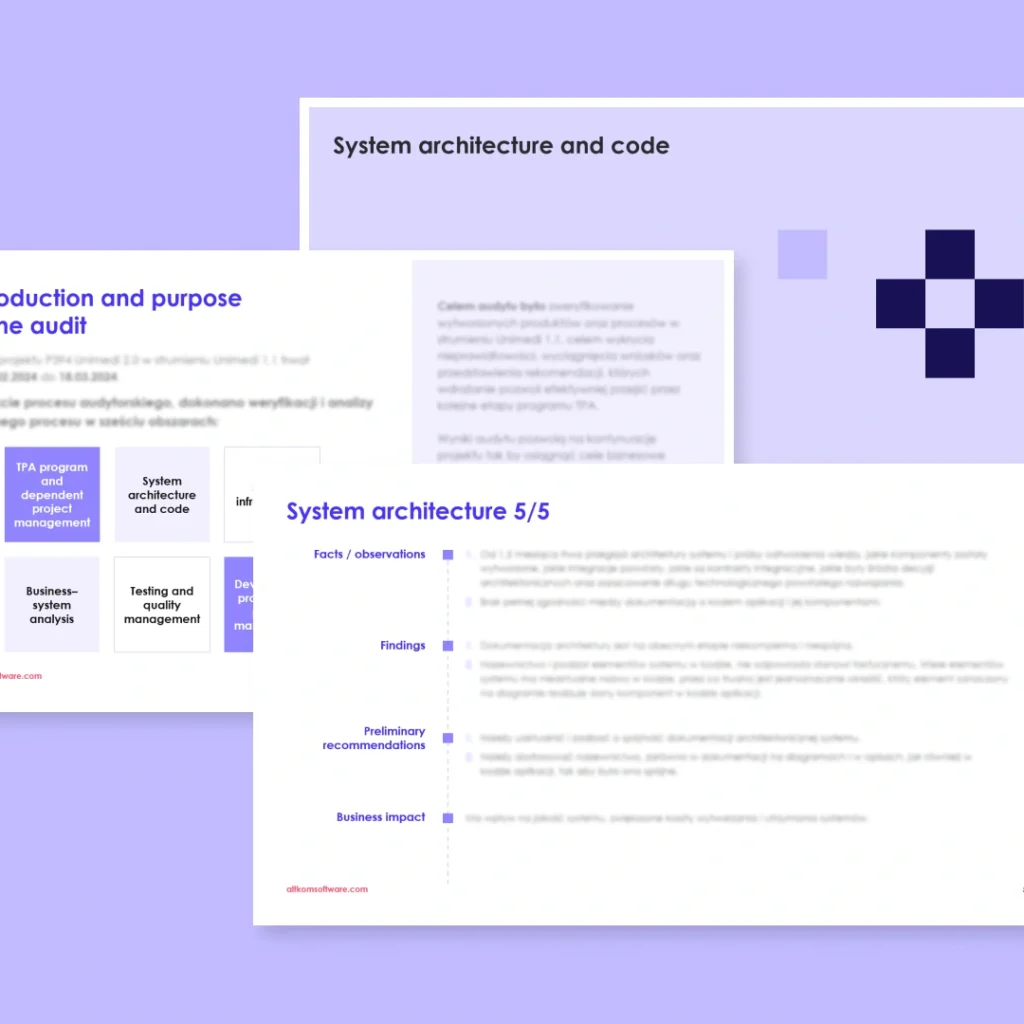
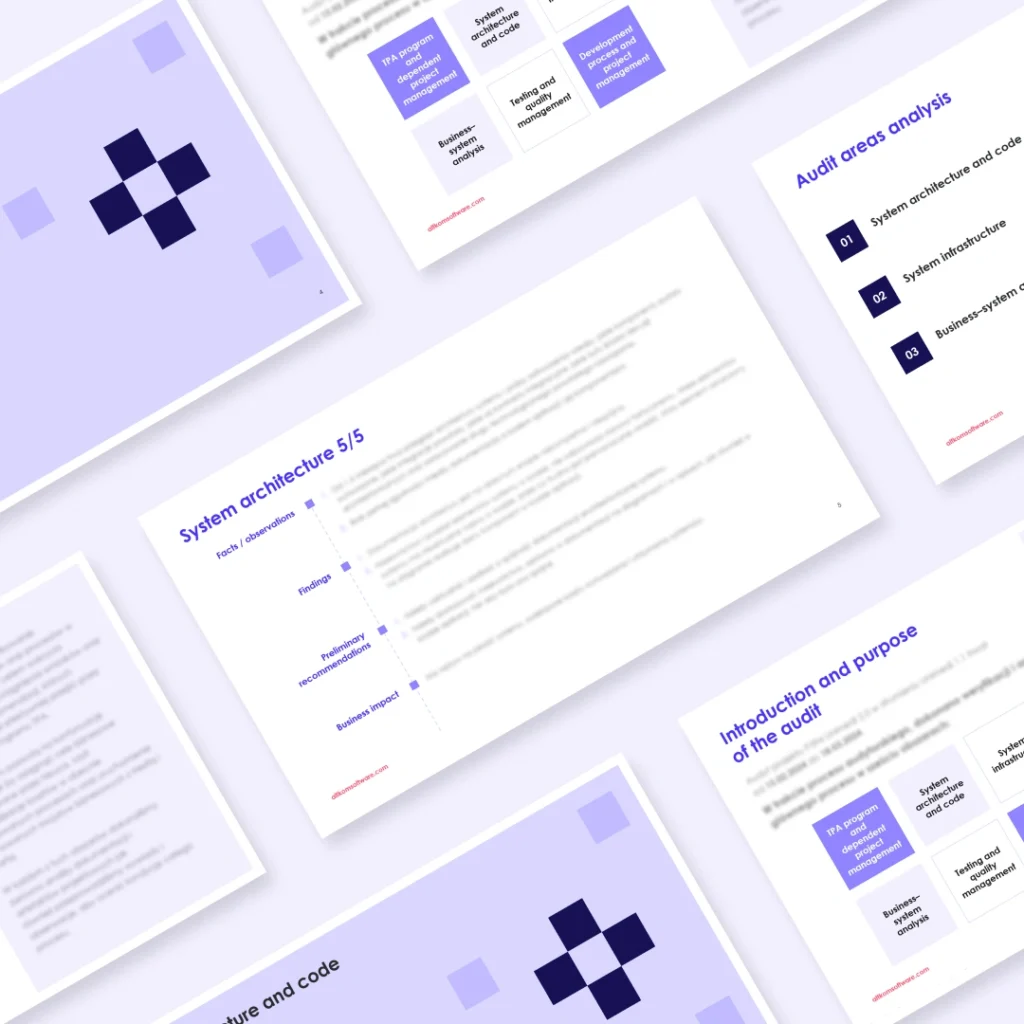
To address the challenges, we carried out a comprehensive audit of six key areas impacting the effectiveness of the TPA program. We used document reviews, interviews, and process observations to identify issues and recommend concrete corrective actions.
- System architecture—We analyzed code quality and system structure, recommending a shift to microservices architecture along with the adoption of unit and integration testing.
- System infrastructure—We identified risks linked to manual configuration and recommended process automation (Infrastructure as Code) and improved consistency across IT environments.
- Business–system analysis—We proposed the use of techniques such as Event Storming to better define requirements, improve stakeholder collaboration, and enhance process documentation.
- Testing and quality management—We advised implementing testing standards, using tools such as TestFLO in JIRA, and establishing clear “Definition of Done” criteria for tasks.
- Development process and project management—We recommended introducing a unified methodology, regular process audits, and team training to improve efficiency.
- TPA program and dependent project management—We proposed better synchronization of activities, improved cross-project communication, and the introduction of portfolio management tools.
The holistic audit gave the client not only a diagnosis of problems but also practical recommendations and an actionable plan tailored to their needs and capabilities, enabling the achievement of business objectives.